
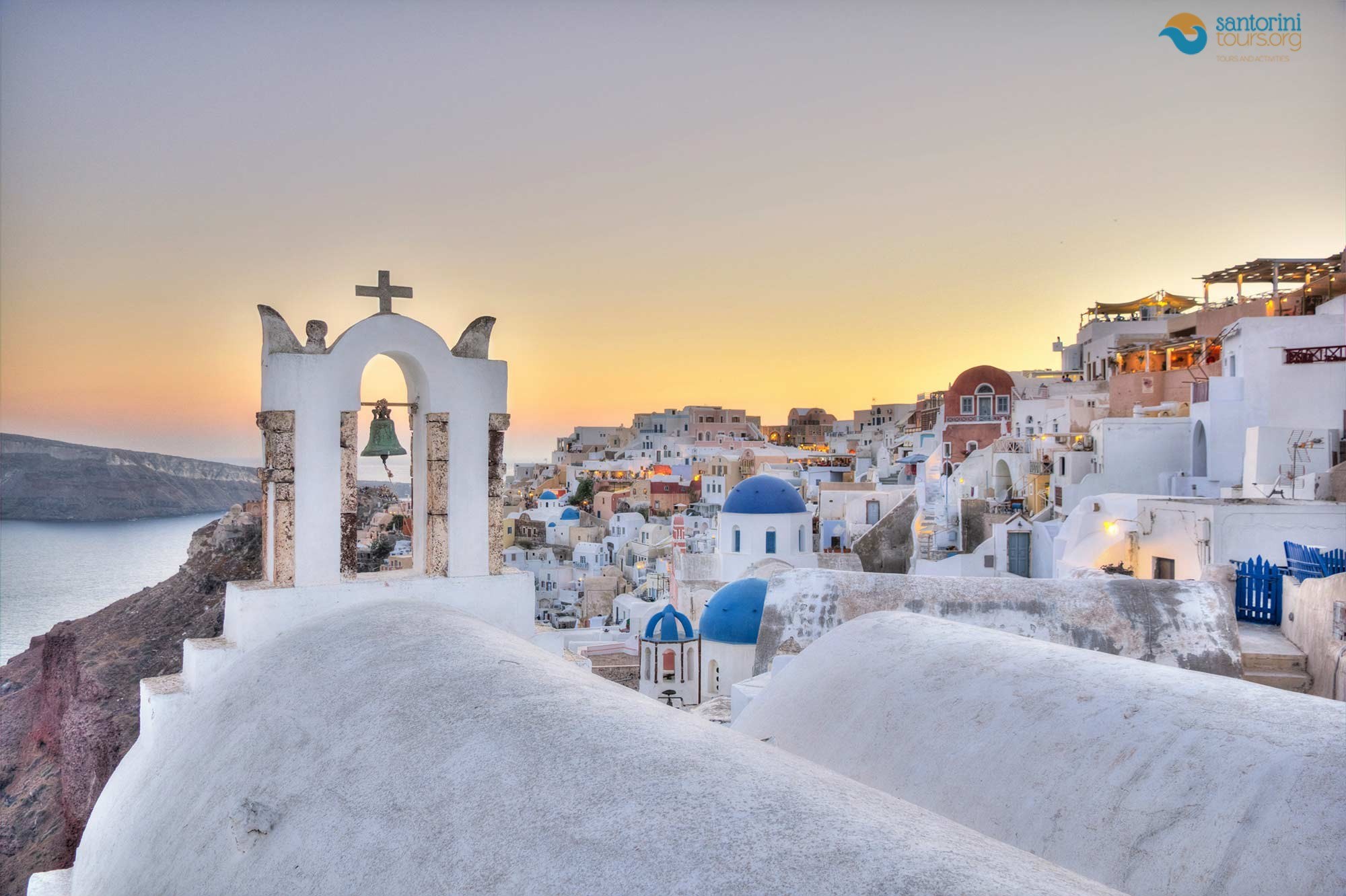
Santorini has one of the most compressed tourist seasons in the Mediterranean and one of the widest swings in what a visit actually feels like. The same island, the same caldera and the same villages deliver completely different days in May and in August, and the difference is not mainly the weather. It is the number of people standing between you and the view.
This guide goes month by month: temperatures, sea conditions, crowd density, cruise volume, what is open, what is closed, and how santorini tours change shape across the year. If your dates are flexible, this is the decision that improves the trip more than any other. If they are fixed, it tells you how to work with them.
For travellers planning the island, santorini tours and santorini tours offer expertly guided experiences across Santorini — from caldera sunsets and volcano walks to private wine tastings and tailor-made sightseeing.
When Is The Best Time For Santorini Tours?
Late April to mid-June, and September to late October. Warm enough to swim, long enough in daylight, and without the July–August density that turns every viewpoint into a negotiation.
Those two windows are where santorini tours are at their most generous. Sea temperatures are comfortable from late May, the light in the hour before sunset is at its best in September and October, and santorini tours run at a pace that leaves room to stand still. Prices sit ten to fifteen percent below peak and availability is far easier.
The trade in the shoulder months is a small weather risk — an occasional windy day in April, a chance of rain in late October — in exchange for a substantially better experience of the same places.
What Are Santorini Tours Like In January And February?
Empty, cheap, dramatic and largely closed. Daytime temperatures around 12–15°C, frequent wind, occasional heavy rain, and a genuine sense of an island returned to its residents.
For winter santorini tours the caldera in low winter sun is arguably at its most striking, and Oia at midday in January is quieter than Oia at dawn in August. Accommodation drops to a fraction of summer rates. Akrotiri, the villages, Pyrgos and the caldera walk are all available and pleasant.
What is not available is the sea. Every boat operator stops, which removes the catamaran, the volcano and Thirassia entirely. Many beach tavernas and several wineries close. Winter santorini tours are therefore vehicle-based and land-only, and for travelers whose interest is landscape and archaeology rather than swimming, that is a fair trade at a very low price.
Is March Worth Considering?
Only at the very end. Early March is still winter — cool, windy and with the summer infrastructure shut. By the last week the island begins to reopen.
For March santorini tours temperatures reach 16–18°C, the wildflowers on the volcanic hillsides are genuinely beautiful, and the walking is at its most comfortable of the year. Boat operators typically restart around Easter rather than by calendar date, so the sea half of the island remains uncertain.
March suits walkers and photographers. The Fira-to-Oia path in March, with no heat and almost nobody on it, is one of the best experiences the island offers, and the land-based santorini tours running at that point are quiet and inexpensive.
What Changes In April?
Everything reopens. By mid-April most hotels, restaurants and boat operators are running, temperatures reach 18–21°C, and the first cruise ships appear.
For santorini tours Easter is the pivot. Greek Orthodox Easter — which moves year to year and is often later than the western date — brings the island to life with processions, fireworks in Pyrgos and a genuinely local atmosphere that disappears once the summer season proper begins. It is one of the few weeks when a visitor sees Santorini as a community rather than a destination.
The sea is still cold for swimming, around 17°C, so boat santorini tours in April are about the caldera views and the volcano rather than the swim stops. Crowds are light, prices are moderate, and the light is excellent.
Read more: Santorini Tour Buses
Is May A Good Month For Santorini Tours?
Among the two or three best. Temperatures of 22–25°C, sea warming through the month, long daylight, everything open, and crowd levels still comfortable.
For santorini tours May is when the island stops being a shoulder season and starts being a summer destination without yet carrying summer’s density. Wineries are fully operating, the beaches have their infrastructure back, and the caldera walk is still comfortable in the middle of the day.
Santorini tours in May run at close to full choice with far better availability than July. If a trip has flexible dates and one priority is not queueing, May is the strongest single recommendation in the calendar.
What Are Santorini Tours Like In June?
Excellent until roughly the third week, then it tips. 26–29°C, warm sea, the longest days of the year, and steadily rising crowd levels.
For santorini tours early June is close to perfect: swimming is comfortable, the light lasts until nine in the evening, and the island has not yet reached the density it holds from late June onward. This is also when catamaran conditions are at their most reliable, before the meltemi wind settles in.
By the last week of June cruise volume climbs sharply and Oia’s sunset becomes a serious crowd. Santorini tours from that point onward benefit enormously from an earlier start, and the difference between an eight o’clock departure and a ten o’clock one begins to define the whole day.
How Bad Are Santorini Tours In July?
Hot, busy and expensive — 28–32°C, peak cruise volume, and every viewpoint at capacity from eleven until evening.
None of that makes July a bad month for santorini tours; it makes it a time that requires strategy. The sea is at its most inviting, everything is open and running at full frequency, and the sunsets are the most reliable of the year.
What changes is that timing stops being an optimisation and becomes a requirement. July santorini tours need to start early, run the circuit anticlockwise and watch sunset from somewhere other than Oia. Booking windows tighten too — private vehicles and catamarans sell out four to eight weeks ahead.
The meltemi also arrives, which is a mixed blessing: it makes the heat bearable on land and cancels catamaran sailings at short notice at sea.
Read more: Megalochori Santorini Private Guided Transfers
Is August Different From July?
Slightly hotter, slightly busier, and with an added Greek domestic peak in the middle two weeks.
For santorini tours mid-August brings Greek holidaymakers on top of the international season, and the fifteenth is a major religious holiday celebrated across the Cyclades. Accommodation reaches its annual maximum, ferries fill, and the island runs at genuine capacity.
The heat sits at 29–33°C with strong sun and very little shade at the archaeological sites or on the volcano path. The Fira-to-Oia walk is a dawn activity or not one at all. August santorini tours should be shorter, earlier and more water-focused than the same itinerary in May — the boat day, in particular, becomes the most comfortable way to spend an August afternoon.
Why Is September The Best Month For Santorini Tours?
Because the sea is at its warmest and the crowds have started to thin. 26–29°C, water around 24°C, and a noticeable drop in density after the first week.
September inherits August’s warmth without its pressure. The light lengthens and softens, the meltemi eases through the month making boat conditions more dependable again, and the villages regain enough space to walk comfortably.
For most travelers it is the single best compromise on the calendar: everything open, swimming excellent, santorini tours running at full choice, and prices beginning to fall. Anyone with genuinely free dates should look here first.
What Are Santorini Tours Like In October?
The last full month, and a very good one — 21–25°C, sea still swimmable, prices down, crowds well below summer.
For santorini tours early October is late summer with the pressure released. By the last week the island begins closing: some hotels shut, boat schedules thin, and the first serious rain becomes possible. Cruise arrivals taper through the month.
October santorini tours are relaxed and inexpensive, and the walking is comfortable again in the middle of the day. The one caveat is that a booking made for late October should have a flexible alternative, because both weather and operating schedules become less certain.
What Happens In November And December?
The season ends. Boat operators close, cruise ships stop, many restaurants and hotels shut, and the island returns to its winter rhythm.
For late-season santorini tours temperatures fall to 16–19°C in November and 13–16°C in December, with increasing rain and wind. What remains open is the year-round island: Fira, the main villages, Akrotiri, the caldera road and a handful of restaurants serving residents.
Read more: Gay Friendly Tours Santorini
December has a particular appeal for anyone who wants the caldera without a single other visitor in the frame. Land-based santorini tours still run, roads are empty, and the low sun on the cliffs is spectacular. It is a landscape and archaeology trip rather than a beach one.
When Do Santorini Tours Have Warm Enough Sea To Swim?
Late May through October, peaking around 24–25°C in August and September.
For swim-stop santorini tours April sits near 17°C and is bracing. May climbs through the month and is comfortable by the end. June through October are all genuinely swimmable, with September usually the warmest water of the year because the sea lags the air temperature by several weeks.
This lag is why September so often outperforms June despite similar air temperatures: the same warmth on land, meaningfully warmer water, and fewer people. Boat-based santorini tours with swim stops are at their best in that late-season window.
When Are The Cruise Ships At Their Heaviest?
Late June through mid-September, with individual days reaching four or five simultaneous arrivals.
For santorini tours cruise volume, not hotel occupancy, is what actually determines how crowded Oia feels on a given day. Several thousand passengers come ashore within a couple of hours, move through the same cable car and follow broadly the same route north.
The schedule is published in advance, and checking it for your dates costs nothing and changes the plan more than any other single piece of information. A no-ship day in June and a five-ship day in the same week are different islands, and santorini tours that know the schedule route around it.
When Does The Meltemi Wind Blow?
Mid-July through early September, strongest in August.
For sea santorini tours the meltemi is a dry northerly that can blow for several days at a stretch. On land it is a relief — it takes the edge off the heat and keeps the humidity low. At sea it is the main cause of cancellations, and catamaran sailings are called off at short notice when it peaks.
Reputable operators reschedule or refund in full. The practical response when booking sea santorini tours in high summer is to schedule the sailing early in the stay rather than on the final afternoon, so a cancellation has somewhere to move to.
Read more: Transfer From to Airport Port Oia Finikia
Which Month Is Best For Photography On Santorini Tours?
Late September and October for the light; March and April for the landscape.
For photography santorini tours autumn brings longer golden hours, softer shadows and more atmospheric skies than the flat, hard light of midsummer. The villages are quieter, which matters enormously when a composition depends on an empty lane.
Spring offers something different: green hillsides, wildflowers across the volcanic slopes, and a clarity in the air that summer haze removes. Photographers booking private santorini tours in either window get the two things they need most — good light and the freedom to wait for it.
What Is The Best Month For Wine?
August and early September for the harvest; May and October for a comfortable tasting.
Santorini’s harvest is unusually early because of the heat and the drought, typically beginning in the first half of August. Visiting a winery during it is genuinely interesting, though the wineries themselves are at their busiest and least contemplative.
For the tasting itself, the shoulder months are better: cooler, quieter, and with more attention from the people pouring. Wine-focused santorini tours in May or October are among the most relaxed experiences on the island.
When Should You Avoid Santorini?
Mid-August if crowds bother you, and late November through February if you want the sea.
Those are the two genuine mismatches for santorini tours. Mid-August combines peak international and peak Greek domestic demand with the year’s highest temperatures. Deep winter removes half the island’s experiences entirely.
Everything between those extremes is a question of preference rather than a mistake. Santorini tours run productively for eight months of the year, and the difference between the best month and an average one is smaller than the difference between a well-timed day and a badly timed one within any month.
How Far Ahead Should You Book Santorini Tours By Season?
Four to eight weeks for July and August, two to three for May, June, September and October, a few days in winter.
For santorini tours capacity, not price, is what lead time buys. Private vehicles and catamarans are genuinely limited in number and sell out first; shared minibus santorini tours stay available considerably longer, often until a day or two before.
Read more: Nea Kameni Santorini Private Guided Transfers
Booking earlier does not generally reduce the price the way flights do. If a specific operator, a named guide or a particular date matters to you, that is what booking ahead secures.
What Time Of Day Should You Start In Each Season?
08:00 in July and August, 09:00 in June and September, 09:30 in the shoulder months, and any time at all in winter.
For santorini tours the start time is a direct function of crowd density and heat, and it is the single most consequential detail on any booking. In midsummer, santorini tours departing at eight are through Oia before the tenders finish unloading; the same route departing at ten spends the day behind several thousand people.
Santorini from the air: the caldera, the villages and the cliffs.
In April, May and October the curve is much flatter and a relaxed start costs very little. In winter the concept barely applies — the island is empty and the only constraint is the shorter daylight.
Does The Route Itself Change By Season?
Yes — summer routes should be shorter, earlier and more shaded; shoulder-season routes can be longer and more ambitious.
In July and August the sensible shape for santorini tours is fewer stops, an early start, Akrotiri or a winery through the hottest hours, and the afternoon on the water. The Fira-to-Oia walk comes off the table except at dawn.
In May, June, September and October the same nine hours comfortably absorb six stops including a long village walk. This is why comparing santorini tours purely by itinerary across seasons is misleading — the identical route is a different day in different months.
What Is Open In Each Season?
Year-round: Fira, the villages, Akrotiri, the caldera road, the main museums. Seasonal: boats, beach tavernas, many wineries, most hotels.
For santorini tours the rough boundary is Easter to late October. Outside it, the land-based half of the island continues largely unaffected while the sea-based half stops entirely. Anyone planning winter santorini tours should build the itinerary from the year-round list and treat anything else as a bonus.
How Does Daylight Change Across The Season?
Sunset moves from about 18:15 in early April to 20:50 at midsummer and back to 17:20 by late October.
Read more: Santorini North Part Tour
That two-and-a-half-hour swing reshapes the whole day of santorini tours. In June a nine o’clock start still leaves eleven hours of usable light, which is why the most ambitious itineraries fit comfortably into midsummer. In October the same start compresses everything, and a full circuit ending at a sunset viewpoint has to be tighter.
It also changes dinner. In June sunset is late enough that a tour can finish at a viewpoint and still leave time to eat afterwards; in October the two collide, and santorini tours in the late season often end with dinner built in rather than following it. Worth confirming which shape an operator is offering before booking, because the difference decides how the evening works.
The shoulder months are the sweet spot for photographers precisely because sunset lands at a civilised hour — late enough for a full day beforehand, early enough that the light show does not run past nine.
How Does Rainfall Affect The Calendar?
Effectively zero from June to September, light in May and October, and concentrated between November and March.
For santorini tours the island is genuinely arid — it has no rivers and historically relied on cisterns — and summer rain is close to nonexistent. That reliability is one of the reasons the island’s season is so compressed and so busy: from June onward, a booked day is almost certainly a clear one.
In the shoulder months an occasional shower passes through, rarely lasting a full day. Land-based santorini tours run regardless, and Akrotiri being roofed gives any itinerary a weather-proof anchor. Winter brings real rain and the occasional storm that closes the ports, which is worth knowing if a ferry connection is part of the plan.
How Do Prices Move Through The Year?
Peak in the first three weeks of August, roughly ten to fifteen percent lower in the shoulder months, and half or less in deep winter.
Against santorini tours accommodation swings hardest — a caldera-view room in August can be three or four times its April rate. Tour pricing is steadier because the underlying costs, the vehicle and the driver’s day, do not change with the season.
What does change is availability, and effectively that is a price of its own. In August the cheaper santorini tours sell out first, leaving the more expensive options as the only ones bookable, which raises the practical cost even where the headline rates have not moved. In May or October the full range stays open until close to the date.
Which Month Suits Families Best?
Late June or early September — warm sea, everything open, and school holidays covered at either end of the peak.
The constraint for most family santorini tours is the school calendar, which pushes towards July and August, the two months whose heat and crowds suit children least. Where the dates allow even a week of movement, the last days of June or the first two weeks of September deliver the same swimming with noticeably less pressure.
Read more: Santorini Private Custom Tour
Within high summer, the answer is format rather than timing: boat-based santorini tours in the afternoon, short early land stops, and no expectation of a nine-hour village circuit. Heat, stairs and queueing are what actually defeat a family day, and all three peak between eleven and four in midsummer.
Which Month Suits Couples And Occasions?
Late September and early October, then May.
Proposals, anniversaries and honeymoons on santorini tours benefit from exactly what the shoulder season provides: a viewpoint with room to stand, a sunset that is not a scrum, restaurant availability, and softer light. The famous images that draw people to Santorini were mostly not taken in August.
Private santorini tours in these months can also hold a specific spot at a specific minute far more reliably, because the viewpoint is not already occupied by a coach group. If an occasion is the reason for the trip, the month matters more than the operator.
Which Month Suits Cruise Passengers?
Whichever the ship arrives — but May, June, September and October days are dramatically easier than July and August ones.
Cruise passengers booking santorini tours rarely control the date, so the useful knowledge is what the season does to the port. In midsummer the tender and cable-car bottleneck can absorb an hour in each direction on a multi-ship day; in the shoulder months it moves freely.
The practical response is to scale ambition to the season. Shore-based santorini tours in August should plan three stops and a generous buffer; the same day in May comfortably takes four. Giving the operator the ship name and all-aboard time at booking matters in every month and matters most in the peak.
What Are The Local Events Worth Timing Around?
Greek Orthodox Easter, the 15th of August, and the August harvest.
For santorini tours Easter is the most atmospheric week of the year — processions through the villages, fireworks in Pyrgos, and an island functioning as a community rather than a destination. It moves year to year and is often later than the western date, so it needs checking rather than assuming.
The fifteenth of August is a major religious holiday across Greece, and it lands in the middle of the busiest fortnight. The wine harvest, unusually early because of the heat and drought, begins in the first half of August and is genuinely interesting to see, though the wineries are at their busiest then.
Read more: Santorini Sightseeing Tour
None of these should decide a trip on their own, but santorini tours booked around Easter in particular offer something no other week does.
How Does The Season Affect Which Villages Are Pleasant?
Oia degrades most sharply with the season; the inland villages barely change at all.
On santorini tours Pyrgos, Megalochori and Emporio see a fraction of the visitor flow in any month, so an August afternoon there feels close to a May one. Imerovigli holds up well. Fira absorbs cruise traffic and becomes congested in the middle of the day from June onward.
Oia is the outlier. In April it is a beautiful clifftop village; in mid-August its main walkway is at capacity for most of the afternoon. This is why well-designed santorini tours weight the inland villages more heavily in peak season and the caldera rim more heavily in the shoulder months — the same route, rebalanced for what is actually enjoyable at the time.
Frequently Asked Questions About Timing
What Is The Cheapest Month To Visit?
January or February, by a wide margin on accommodation. Among months when everything is open, late October and early May are the best value, with santorini tours running ten to fifteen percent below peak.
Is It Too Hot In August For Sightseeing?
Not if the day is structured for it. Early start, roofed or shaded stops through the middle, water in the afternoon. It is the unstructured August day that becomes unpleasant.
When Is Oia’s Sunset Most Crowded?
Late June through early September, and worst in the two weeks around mid-August. In April or October the same viewpoint is comfortable.
Can You Swim In October?
Yes, comfortably in the first three weeks. The sea holds its summer warmth well into the month, which is why late-season boat santorini tours still include swim stops.
Which Month Has The Best Weather Overall?
September — warm air, the warmest sea of the year, easing wind, softening light and falling crowd levels. May is the closest alternative for anyone who prefers cooler days.
Do Tours Run All Year?
Land tours yes, sea tours no. Vehicle-based santorini tours operate every month; boat operators generally run from around Easter to late October.
How Does The Season Change What You Should Pack?
Summer needs sun protection and water; the shoulder months need a wind layer; winter needs a waterproof.
Read more: Santorini Full Day Tour
The constant across every month of santorini tours is footwear. The village lanes are polished marble worn smooth by decades of foot traffic, and they are steeper than photographs suggest. Closed shoes with grip are the single most important item on santorini tours in any season, and the volcano path makes them non-negotiable.
In July and August, two litres of water per person and high-factor sun cream are genuine requirements rather than suggestions — the archaeological sites and the volcano have almost no shade, and the whitewashed walls throw glare from every direction. A hat that stays on in wind is worth more than a stylish one.
From April to June and again in September and October, the surprise is cold rather than heat. The meltemi and the evening drop mean a caldera viewpoint at sunset is markedly cooler than the afternoon before it, and colder again on a boat. A light windproof layer in the bag solves it. Winter simply needs a proper jacket and an acceptance that some days will be wet.
Which Season Gives The Best Value Overall?
Early October and the second half of May, by a clear margin.
Both sit just outside the peak for santorini tours in every dimension that matters. Accommodation is meaningfully cheaper than August without the winter closures. The sea is swimmable. Everything is open. Crowd levels allow a viewpoint to be enjoyed rather than survived. And the full range of santorini tours remains bookable close to the date rather than selling out weeks ahead.
The value argument is not only financial. A day that covers six stops comfortably in October covers four in August for the same price, because queueing and heat consume the difference. Measured in experience per euro rather than euros alone, the shoulder months win by more than the price tables suggest.
The one thing peak season buys that the shoulder cannot is certainty — of weather, of every operator running, and of the sea being at its warmest. For travelers with one fixed week and no tolerance for a wet day, that certainty has a real value of its own.
How Should You Plan If Your Dates Are Fixed?
Work the day rather than the month: start earlier, run anticlockwise, and move the crowded stops to their quietest hours.
Most visitors booking santorini tours cannot choose their dates. The useful news is that the within-day decisions are worth more than the between-month ones. An eight o’clock start in August, running Oia first and finishing at a viewpoint that is not Oia, produces a better day than a badly sequenced ten o’clock start in May.
Check the cruise schedule for your specific dates — it is published in advance and costs nothing to consult. Then book the sea component early in the stay rather than at the end, so a wind cancellation has room to move. Santorini tours arranged on those two principles absorb almost everything a peak-season week can present.
Read more: Santorini Semi Private Small Group Sightseeing Private Tour
Where the dates are truly locked into mid-August, shift the balance of the trip towards the water and towards the inland villages, and treat the caldera rim as an early-morning activity only.
How Does The Island Feel Different Across The Year?
In spring it is a working island with visitors; in midsummer it is a destination with residents; in winter it is a village again.
That shift is the least discussed and most noticeable thing about timing a visit. In April and May the tavernas are staffed by families rather than seasonal workers, the pace in Fira is unhurried, and conversations happen. By late July the same places are running at maximum throughput, professionally and efficiently, but the texture is different.
October reverses it. As the ships stop and the crowds thin, the island exhales — restaurants have time to talk, viewpoints empty out, and the last two weeks feel like a private season. Guides on santorini tours are noticeably more relaxed in the shoulder months, and on a small island where the guide is most of the experience, that matters more than the temperature difference.
None of this appears in a weather table, and for a lot of travelers it ends up being the thing they remember about when they came.
What Is The Biggest Timing Mistake On Santorini Tours?
Booking a peak-season day at a shoulder-season pace.
The mistake is not choosing August. It is choosing August and then planning the itinerary that works in May — a ten o’clock start, seven stops, the standard clockwise circuit, and Oia for sunset. That plan is comfortable in April and close to unworkable in the second week of August, and the difference is entirely avoidable.
Peak-season santorini tours need a different shape rather than a different island: earlier, shorter, anticlockwise, water in the afternoon, and sunset somewhere with room to stand. Travelers who adjust the shape report August days as good as anyone’s; travelers who do not are the source of most of the “too crowded” reviews.
Does The Best Month Depend On What You Want To See?
Yes, and it is the most useful way to narrow the calendar: the caldera is year-round, the sea is May to October, the wildflowers are March and April, and the harvest is August.
Travelers who fix a month before deciding what they actually want tend to end up mismatched. Someone whose priority is swimming has no business in April, and someone whose priority is empty villages and long walks has no business in the second week of August. Working backwards from the interest rather than forwards from the dates produces a far better trip.
The one element available in every month is the caldera itself, which is why land-based santorini tours run all year and why a winter visit is a genuine option rather than a consolation. Everything else has a window, and the windows are wide enough that most interests are served by two or three months rather than one.
The Short Version
September first, May second, early June and October close behind. July and August are excellent if you start early and spend the afternoons on the water. April is quiet and beautiful with a cold sea. Winter is a different trip entirely — landscape, archaeology and empty roads, with no boats at all.
And the timing that matters most is not the month. Within any month, the difference between an eight o’clock start running anticlockwise and a ten o’clock start following the coaches is larger than the difference between June and September. Well-planned santorini tours get both decisions right, and the second one is available to everybody, in every season, at no extra cost.
Read More
Discover more from NETCULTURE SEO AGENCY:
- SEO NEWSLETTER
- Best seo agency greece
- Best seo agency in greece
- Seo agency in greece
- 100 MARKETING STATS ΓΙΑ ΤΟ
Contact
Santorinitours.org
Travel Agency In Greece
Karterados 847 00
6936914687